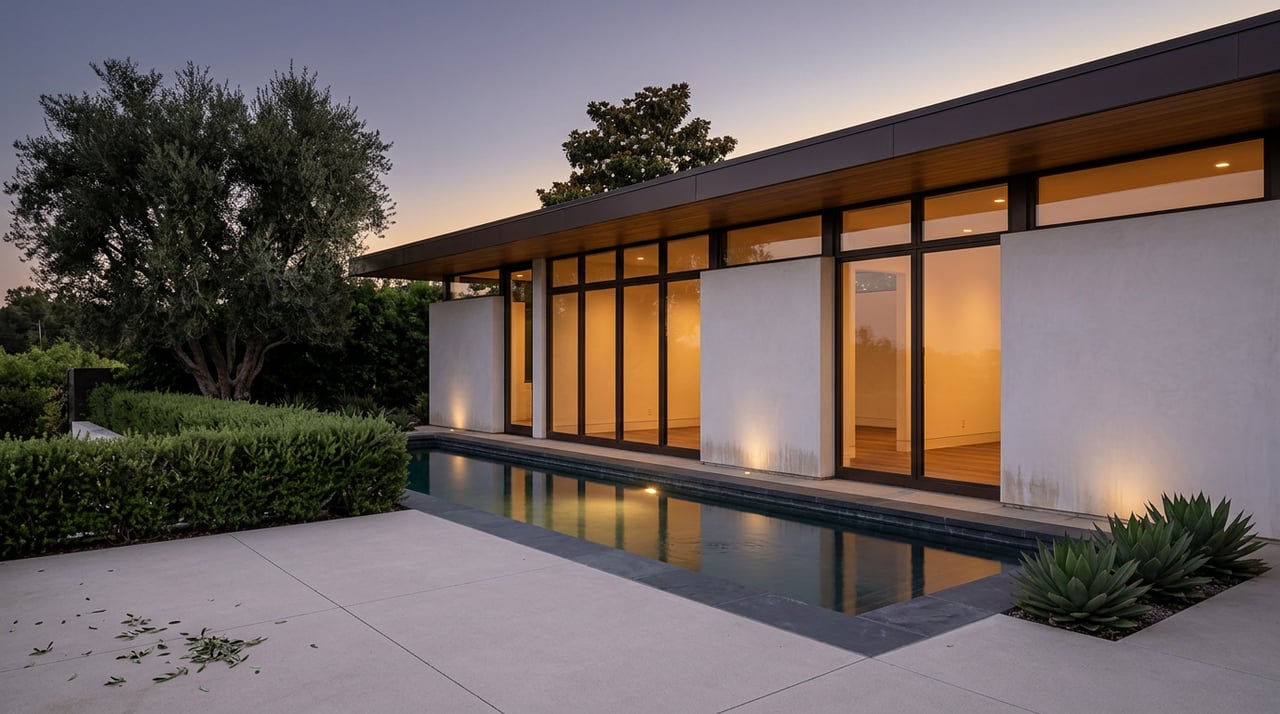
A house on Carbon Beach is close enough to framing completion that the City of Malibu named it in its own June update as the first Palisades Fire rebuild to reach that stage. A few miles west, homeowners in the Broad Beach and Big Rock corridor are still arguing with the city and each other about whether their next septic system should be temporary or whether they should be forced onto a sewer line that does not exist yet. Both are Malibu addresses. Both burned in fires that made national news. Neither is on the same timeline, and neither will be for years.
That gap is the thing a buyer comparing Malibu inventory in September 2026 needs to understand before reading another rebuild statistic. The city's own numbers, and the state's, describe Malibu as a single recovery in progress. It is not. It is at least three separate regulatory tracks running at three different speeds, and which track applies to a given parcel depends on details that rarely make it into a listing description.
Three Fires, Not One
Most coverage of Malibu's recovery treats the destruction as a single event tied to January 2025. It was not. The Broad Fire burned in November 2024. The Franklin Fire followed in December 2024. The Palisades Fire, the one most people mean when they say "the fire," hit in January 2025. All three caused serious losses inside Malibu city limits, and the City's Disaster Rebuild Ordinance, No. 524 and its later update 524U, covers rebuilds tied to all three.
The state relief does not. Governor Newsom's executive order suspending CEQA review and the California Coastal Act's permitting requirement for qualifying rebuilds names the Palisades Fire specifically, along with a handful of others including Eaton and Hurst. It does not name the Franklin Fire or the Broad Fire. A property that burned in December 2024 gets the City's local streamlining tools but not the state's suspension of coastal permitting, while a neighbor whose home burned three weeks later in January qualifies for both. Same street, same rebuild ambitions, different regulatory floor.
For a buyer, that distinction is not academic. It determines whether a rebuild still needs to clear a Coastal Development Permit through the normal process or can proceed under a narrower, faster local track. Before treating a "fire rebuild" listing as one category, it is worth asking which of the three fires actually damaged the structure.
What the Permit Actually Is
Malibu offers rebuilding owners more than one path back to a certificate of occupancy, and the paths are not close in cost or time. According to Goldenline Construction, a strict like-for-like rebuild can qualify for a Planning Verification that runs about $200 and takes roughly a week. A project that needs a Coastal Development Permit runs $11,579 or more in city fees and 12 to 24 months in review.
| Pathway | Typical Cost | Typical Timeline | Applies When |
|---|---|---|---|
| Planning Verification | About $200 | About 1 week | Strict like-for-like rebuild |
| Rebuild Development Permit (Ord. 524) | Varies by scope | Months, not years, for qualifying projects | Palisades, Franklin, or Broad fire rebuild meeting local criteria |
| Coastal Development Permit | $11,579 or more | 12 to 24 months | Projects requiring a Coastal Development Permit |
The pathway a seller chose, or was forced into, is information a buyer can ask for directly. A home that cleared Planning Verification months ago is standing on a different foundation of certainty than one still working through a Coastal Development Permit. Both might be marketed the same way. They are not the same risk.
The Fight Over What Goes in the Ground
Coastal permitting is not the only regulatory layer slowing parts of Malibu. Along Broad Beach and Big Rock, the city has been weighing whether fire-affected beachside parcels should eventually connect to a sewer main instead of rebuilding individual septic systems, a debate complicated by the cost of running sewer lines under Pacific Coast Highway east of Topanga and by Malibu's long-standing resistance to sewer infrastructure generally. Big Rock residents have pushed back directly, arguing their septic systems work fine as is.
The Regional Water Quality Control Board has allowed a workaround: interim septic repairs and replacements can proceed if the city commits to keep the sewer project moving. That compromise is the only reason some fire victims in that corridor can rebuild now rather than waiting years for infrastructure that may or may not arrive.
The council has been explicit that the final decision rests with the affected owners, but the obstacles remain real, including strained city finances and Malibu's deep political resistance to sewer infrastructure.
For a buyer looking at a parcel in that specific stretch of coastline, the wastewater question is not a footnote to due diligence. It is a live policy fight that could affect what gets built, when, and at what cost, regardless of anything the current owner has already spent on design.
What Woolsey Actually Took
City press releases understandably emphasize speed. Governor Newsom's office has called the pace of Los Angeles County permitting historic, and local governments including Malibu issued single-family and ADU permits roughly three times faster last year than in the five years before the fire. That comparison is real, but it measures the rate of permit issuance, not the share of destroyed homes actually rebuilt.
Malibu has been through this before. The Woolsey Fire destroyed 364 homes in the city in 2018. Seven years later, roughly 220 had been rebuilt, with most of the remainder somewhere in process. That is the honest long-run comparison for anyone trying to guess how long full recovery from the Palisades, Franklin, and Broad fires will actually take.
This fire was bigger. The City's official count puts structures destroyed inside Malibu at 720, including 322 coastal homes, with Community Development Director Yolanda Bundy telling the Council that roughly 700 homes and about 10 percent of all structures in the city were lost, and that a third of Malibu was gone within 24 hours. Losses included longtime local names like Moonshadows, The Reel Inn, Cholada Thai, Rosenthal Wine Bar & Patio, and the Malibu Village mobile home park.
As of the city's most recent published tally, from late June 2026, roughly 269 property owners had started rebuilding and 77 rebuild permits had been issued specifically for new construction, against a destruction count roughly double that of Woolsey. If Woolsey is the template, a meaningful share of Malibu's Palisades Fire rebuilding will still be underway well into the 2030s, not because the city is moving slowly by comparison, but because there is simply more to rebuild.
Reading a Listing Instead of a Headline
None of this means Malibu inventory should be approached with hesitation. It means the diligence questions are more specific than "has this been rebuilt." A buyer comparing parcels in fire-affected Malibu should be asking which of the three fires actually damaged the structure, since that determines whether state coastal relief applies. They should ask which permit pathway the property used or will need, since that is the difference between a week of paperwork and two years of hearings. They should ask whether the parcel sits in the Broad Beach or Big Rock wastewater debate, since that fight is unresolved and outside any single owner's control. And they should know that the city's own fee waivers and streamlined windows carry hard deadlines: planning applications must be deemed complete by June 30, 2028, and all building permits must be secured by December 30, 2030, with waived fees owed back to the city within 90 days if the property sells before a certificate of occupancy is issued.
A rebuilt home carries none of that calendar risk. A vacant, permitted lot still does. That difference belongs in the price conversation, not just the disclosure package.
Frequently Asked Questions
Does a Malibu rebuild always need a Coastal Development Permit, even if it matches the original home exactly? Not necessarily. Strict like-for-like rebuilds can qualify for a Planning Verification instead, which is far faster and less expensive than a full CDP.
If I buy a Malibu lot where the previous owner never started permitting, do I inherit their fee waiver eligibility? The city's rebuild fee waivers are tied to hard dates. Planning applications must be deemed complete by June 30, 2028, and permits secured by December 30, 2030. A buyer taking over an unpermitted lot should confirm exactly where that clock stands before assuming the waiver carries forward.
Why does it matter which fire damaged a specific property? The state's suspension of CEQA and Coastal Act permitting requirements applies to the Palisades Fire and several others, but not to the Franklin Fire or the Broad Fire. A property from one of those two still relies on the City's local ordinance for relief rather than the broader state suspension, which can mean a different permitting path.
Malibu's recovery is real and it is uneven, and both of those things can be true on the same block. If you are comparing properties in fire-affected areas and want a clear read on where a specific parcel actually stands, from permit pathway to wastewater exposure to deadline risk, Jonas Heller can help you look past the listing description. Request a private consultation to start with the facts specific to the address, not the citywide average.
This article is general information, not legal, tax or financial advice. Consult a qualified professional about your situation.